

Pump Sizing and Fitting Guide

Getting the right size in a new pair of Irish dance pumps can sometimes feel tricky, especially if you’re trying them for the first time.
With over 30 years’ experience fitting dancers, we’ve created this guide to make the process as straightforward as possible — while sharing the expert tips that will help you avoid the common pitfalls.
Sizing at a Glance
-
Always measure the foot length – don’t rely on trainer size, school shoes, or old pumps. Use the recommended measuring method for an accurate result.
-
Measure both feet – use the smaller foot for the best fit and arch profile.
-
Check the Sizing tab on each product page for the correct sizing chart.
-
Pumps and reel shoes should feel tight at first – they can stretch up to a full size with wear.
-
Don’t buy too big – oversized shoes are hard to dance in, don’t showcase a dancer's point, and can be a trip hazard.
-
Watch our step-by-step video or follow the step below.
Step 1: Measure the Length of Your Foot
The first step is to measure the length of the dancer's feet.
We strongly recommend measuring using the method below as it is the most reliable way to choose the right size for pumps and boys’ reel shoes. There is only a small difference between half sizes so accuracy is really important for a great fit.
- Place a sheet of plain A4 paper against a wall so that the edge of the paper touches the wall.
- Put on the socks normally worn for dancing. Place the foot on the paper with the heel against the wall. (Double check the paper hasn’t slipped!)
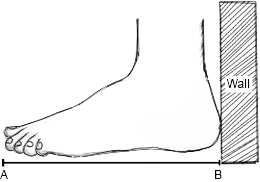
- Relax the foot and toes. Mark the paper at the longest point of the foot (you may need a helper for this).
- Draw a straight line from the wall edge of the paper to the mark, then measure this distance with a ruler. This measurement is what you’ll use to select your size.
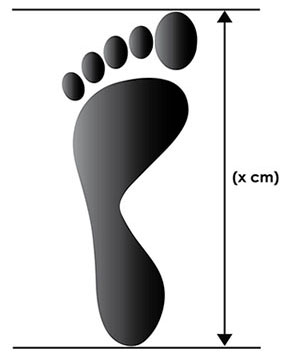
👉 Measure both feet – it’s common, especially in children, for one foot to be slightly longer than the other. We recommend ordering for the smaller foot so the pumps fit tightly and the dancer can achieve a beautiful arch and point.
We strongly advise not ordering based on:
-
School shoes or trainers (sizing varies widely)
-
Existing pumps or jig shoes (they stretch with wear, so the marked size is no longer accurate)
-
The old method of drawing around the foot (it’s prone to error because the result depends on the thickness of the pen and the angle you draw at)
________________________________________________________________________________________________
Step 2: Check the Size Chart
Go to the product page of the pumps or reel shoes you’re interested in and open the Sizing tab (under the product photos).
-
Look for the foot length closest to your measurement
-
It probably won’t be exact – choose the nearest option
Example
If your foot measures 217mm and you want to buy the Hullachan 4 pumps:
-
Size 2.5 suggests a foot length of 214mm
-
Size 3 suggests a foot length of 220mm
We usually suggest choosing the size below the measurement for a nice close fit. So in this example the dancer would choose size 2.5.
However, some dancers may need to adjust the suggested size. If the dancer has narrow or wide feet, SENs or is a championship level then you should consider adjusting the size as below.
-
Wider feet / high instep → go up half a size. If the foot is very wide, you may need to go up a full size. (If you’ve chosen a wide-fit model, then half a size extra is usually enough.)
-
Dancers with SEN considerations → we recommend going up half a size for extra comfort.
-
Narrow feet → often benefit from going down half a size.
-
Advanced dancers → usually prefer their pumps very tight for extra control and to achieve an excellent profile when pointing. Go down half a size or possibly a full size for extra tightness. Don't forget our suggested size already aims to have your toes slightly curled so don't over do it with the size drop. You can risk long term damage your feet and toes if you always buy extra small.
A Word of Caution: Don’t Buy Too Large
It may seem like a safe option to order bigger, but in reality it’s a false economy:
-
Pumps that are too big are difficult to dance in
-
They won’t show a dancer’s point properly
-
They can even be a trip hazard
-
Pumps naturally stretch up to a full size (or more) with wear – so let the pumps do the work rather than starting too large
Step 3: Order Your Shoes
Add your chosen size to the basket.
If you’re unsure, consider ordering two sizes to compare at home, then return the pair that doesn’t fit.
Will Measuring Guarantee the Right Size?
The honest answer is no. While our method works for about 90% of dancers, the shape of each foot is unique, just like a fingerprint.
Two dancers may both measure 217mm, yet still need different sizes because:
-
One has a wide foot, bunion, or high instep
-
Another has flat feet or a narrower heel
-
They simply prefer different fits (snug for competitive dancers, comfortable for social dancers)
Tip: If your feet are unusually shaped, we recommend ordering a few sizes around your measurement. Try them at home, check with your teacher, and return the pairs that don’t fit. This saves time and postage compared with sending one pair back and forth.
📹 Our videos also cover some of these differences and will help you feel more confident when choosing.
________________________________________________________________________________________________
Step 4: Trying Your New Shoes On
Your order has arrived — time for the excitement (and sometimes nerves!) of trying on your new dance shoes.
We recommend lacing them up and trying them on a carpet or non-marking surface in case you need to return them.
📹 If you’re unsure about lacing pumps, watch our guide here:
Have You Got the Right Size?
It depends on the type of fit you’re aiming for. One dancer with curled toes may think the pumps are too small, while a more experienced dancer will see that as perfect.
Advanced dancers usually know their preferred fit. But if this is your first or second pair, here are some helpful guidelines:
-
If they feel very comfortable straight away, they’re too large (unless purchasing for an SEN dancer).
-
If your toes aren’t curled at all, they’re too big.
-
If they feel as roomy as your old pair, they’re too big — pumps stretch with wear, so a new pair must start snug.
-
Ideally, toes should be slightly curled in new pumps or reel shoes. They’ll stretch and shape to your foot after a few classes.
-
Beginners, very young dancers, or those dancing socially can allow for more comfort.
-
Competitive dancers should aim for a snugger fit to achieve a great point once the shoes have stretched a little.
-
If the heel looks baggy or the arch sags, check the fit by pulling the pumps up at the back with the laces so the heel sits fully into the shoe. You would be surprised how many dancers miss this key step to getting a great fit and arch profile.
📹 For a clear visual, watch our How Your Irish Dance Pumps Should Fit video:
Why Are Pumps and Reel Shoes Shorter Than the Size Chart Measurement?
We sometimes hear from parents who are surprised that the shoes look smaller than the foot measurement they ordered against.
Please remember that the measurements on our charts are recommended foot lengths, not the physical length of the shoe.
Pumps and reel shoes are shorter on purpose because:
-
Toes should be slightly curled when fitting a new pair
-
The shorter length encourages stretching around the foot in the first few wears, giving a strong arch profile and point
Final Guidance
If you’re unsure about the fit, bring the shoes to class and ask your dance teacher. In many cases, teachers confirm the fit is correct even if parents initially think they look too small.
That said, we’re also aware that some teachers prefer shoes far smaller than necessary. A reasonable amount of toe curl is healthy, but toes should not be painfully scrunched — especially for young dancers. You can achieve a beautifully fitted pump without risking long-term damage or putting children off dancing because of discomfort.